Camrin Dengel

Lifeblood: From Farms to Fish
Welcome to the Aquifer Recharge Resource Kit
Local irrigators, agencies, and conservation groups are positively changing the way they work together and manage water in order to improve water availability, soil health, and the Teton River fishery. The program is proving to be successful as a model for collaboration in the region, while improving farming and ranching operations, and water quality and quantity.
By sharing this work through print, digital, and social media, you will help us educate and inspire, while expanding participation in and the benefits of Aquifer Recharge.
Want to know more about recharge for a news article or publication?
Media Contact
Max Ludington, LegacyWorks Group
Want to know more about the program or investing in this work?
Program Contact
Zena Wolcott, Friends of the Teton River
How to Use this Toolkit
These resources are intended to provide background information for you, your audience, articles, friends, neighbors, or community efforts. Resources are free and open-source and may be distributed to the public. We ask that authors and artists are given credit for their work, as listed below.
Videos
Photos
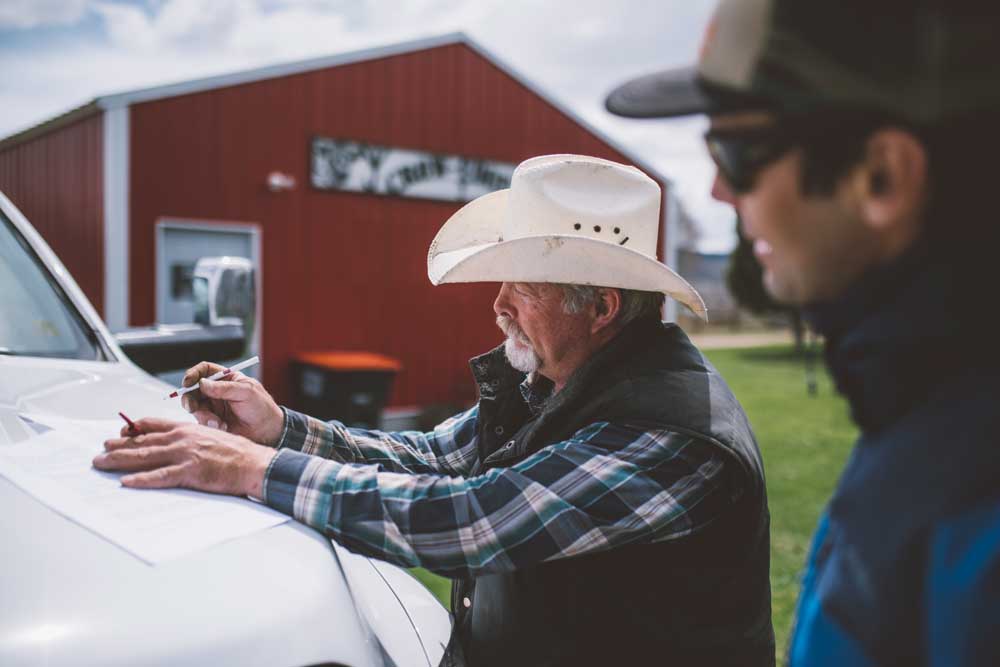
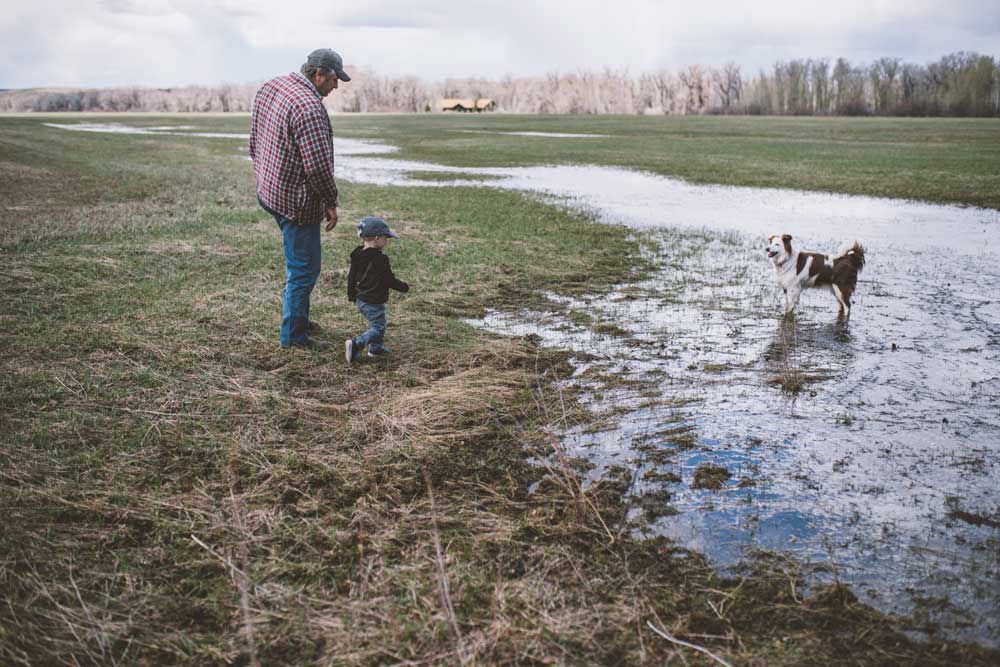
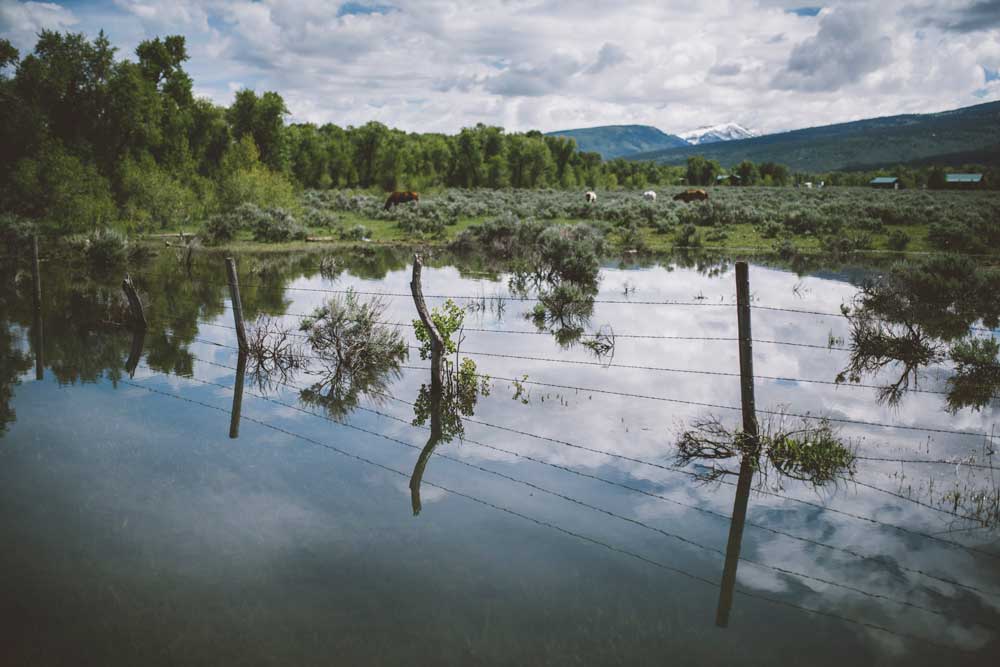


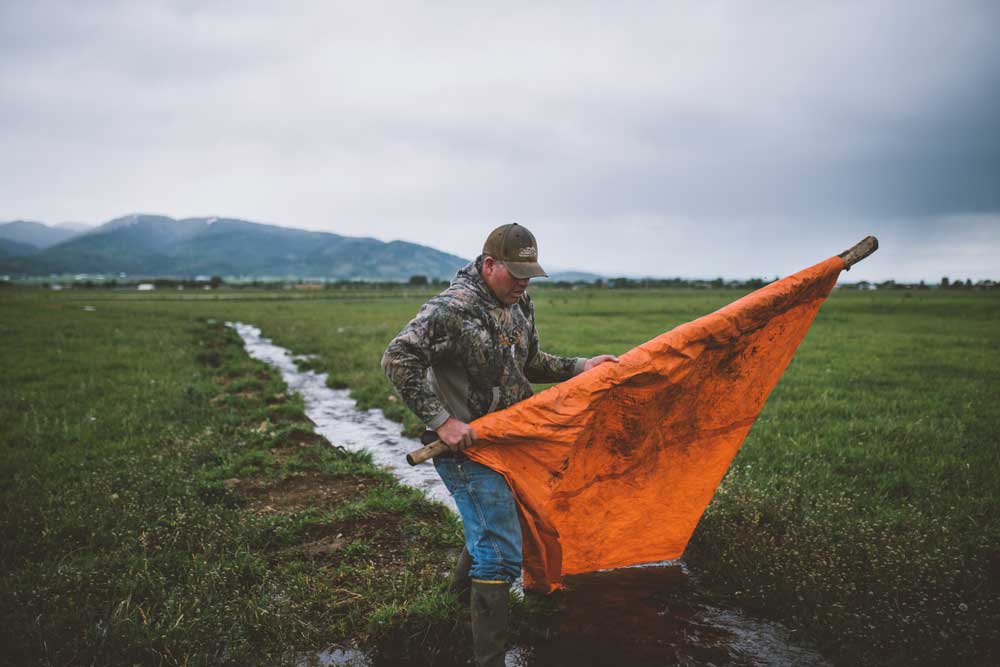
Photos can be used on any platform to share this work. Photos and captions can be downloaded below. Please make sure to give photography credit to Camrin Dengel. (social media tag: @CamrinDengel)
Resources
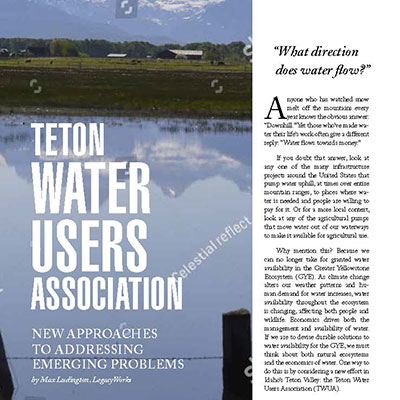
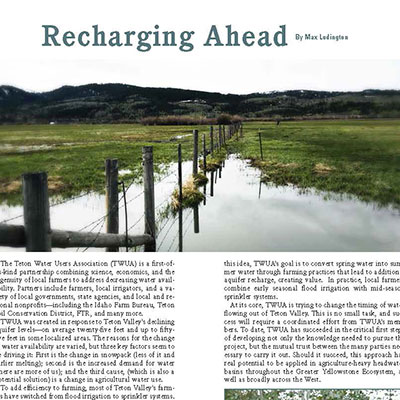
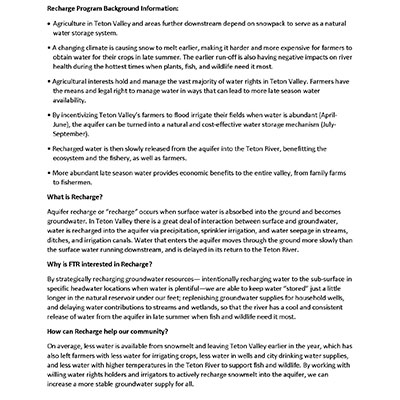
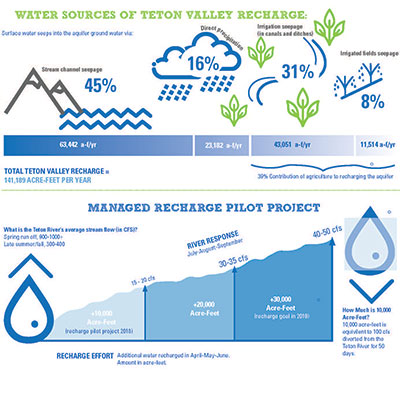
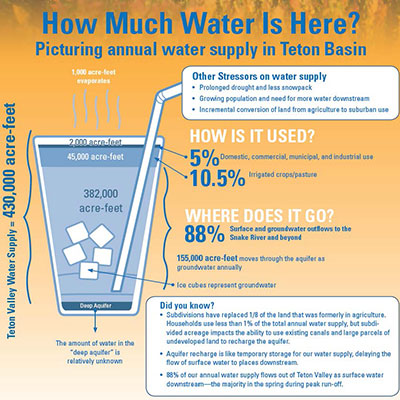
The resources listed above are intended to give you background information on Teton Valley’s water resources, the Aquifer Recharge Program, who’s involved, how it works, and who will benefit.
To download each resource individually, click on the image above. To download all resources together, click on download resources below.
 Give. Beyond outreach, this work requires continued financial support to establish it as a lasting way to manage water for the future of healthy communities and ecosystems. Donations and funding will directly support water management incentives, monitoring, program coordination, and education opportunities for farmers and ranchers.
Thank you for sharing the story and in the success of this program!
“Educating our community is a very important piece to being successful. By sharing what we learn, we are not only getting local producers to buy-in to recharge, the community is understanding the importance of what it is and the benefits to the farmer, the aquifer, and our Basin.”
—Lynn Bagley, Teton Soil Conservation District President




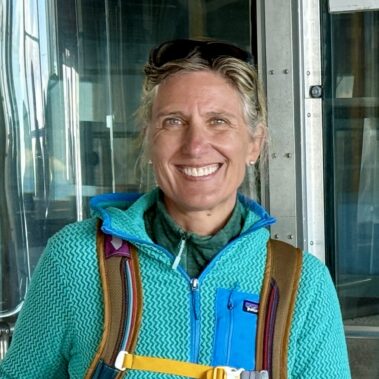
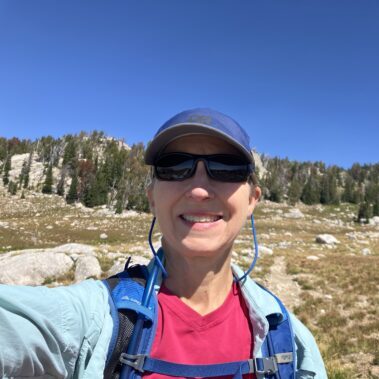 Betsy first visited Teton Valley as a 10-year-old from Atlanta, GA, on a family trip west (station wagon and pop-up camper in tow), and knew from that point that the Tetons were amazing and the Rockies were where she wanted to be when she grew up. With a B.A. in Biology and an M.A. in Geography, she enjoyed a career in natural resource management with the US Fish and Wildlife Service and the Forest Service, the last 20 years in Utah and Montana. In 2022, she and her husband Dan started building their home in Tetonia, moving here in 2023, and are enjoying the outdoor joys of the Tetons and getting to know Teton Valley. She enjoys all things outdoors, particularly hiking, mountain biking, skiing, and trying to dabble in bikepacking; loves traveling although finds leaving their senior tabby to be so hard.
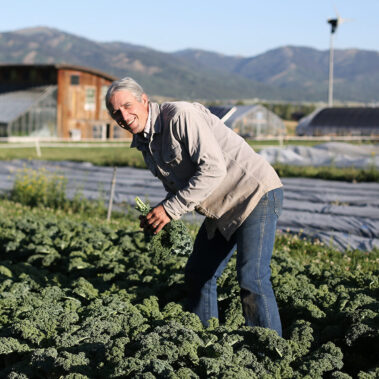 Rafe owns and operates Canewater Farm in Victor, Idaho. Rafe studied business at The University of Georgia and organic agriculture at the University of California Santa Cruz. Rafe brings the unique perspective of the local agricultural community to Friends of the Teton River. He is a farmer and a fisherman who views the Teton River as the lifeblood of the community. He advocates for collaboration between agricultural and recreational stakeholders. He is a proud father of two children, Rowan and Emmalou. He and his family sneak away from the farm any chance they can to camp, fish, ski, bike and explore the beautiful mountains and rivers of the area.